IAS 38 – Intangible Assets

IAS 38

IAS 38 explains the ‘accounting criteria‘ for intangible assets, which are non-monetary assets that are without physical substance and identifiable (either being separable or arising from contractual or other legal rights). IASB · IAS 38 · Intangible Assets CA Jhanzayb (ACA) Qualified Chartered Accountant  ·  IFRS Specialist IAS 38 – Intangible … Read More

ISA 500 – Audit Evidence

ISA 500

ISA 500 (Revised) explains what constitutes audit evidence in an ‘audit‘ of financial statements and deals with the auditor’s responsibility to design and perform audit procedures to obtain sufficient appropriate audit evidence. International Standards on Auditing ISA 500 – Audit Evidence A comprehensive guide to objectives, requirements, and professional application … Read More

Strategic Positioning Model: Framework for Competitive Advantage

Strategic Positioning Model

The strategic positioning model helps businesses evaluate their current market position by analyzing internal strengths and external environmental factors. It combines tools like SWOT and PESTEL to identify competitive advantages and strategic gaps. Understanding the strategic positioning model enables organizations to make informed decisions and adapt to changing market conditions. … Read More

Basic Earnings Per Share Calculator (EPS) + Formula Guide

Basic Earnings Per Share Calculator

A basic earnings per share calculator helps investors and businesses quickly ‘measure profitability’ on a per-share basis. By dividing net income by the weighted average number of outstanding shares, this tool provides a clear view of financial performance. It’s essential for comparing companies and making informed investment decisions. Financial Analysis … Read More

IAS 19 – Employee Benefits

IAS 19

The objective of IAS 19 is to prescribe the accounting and disclosure for ’employee benefits’. IAS 19 requires an entity to recognize: International Financial Reporting Standards Effective: 1 January 2013  ·  Last Revised: IASB 2018 Amendments International Accounting Standard IAS 19 – Employee Benefits A definitive reference for accountants, finance … Read More

IFRS 16 Lessee Accounting Explained with Journal Entries

Lessee Accounting

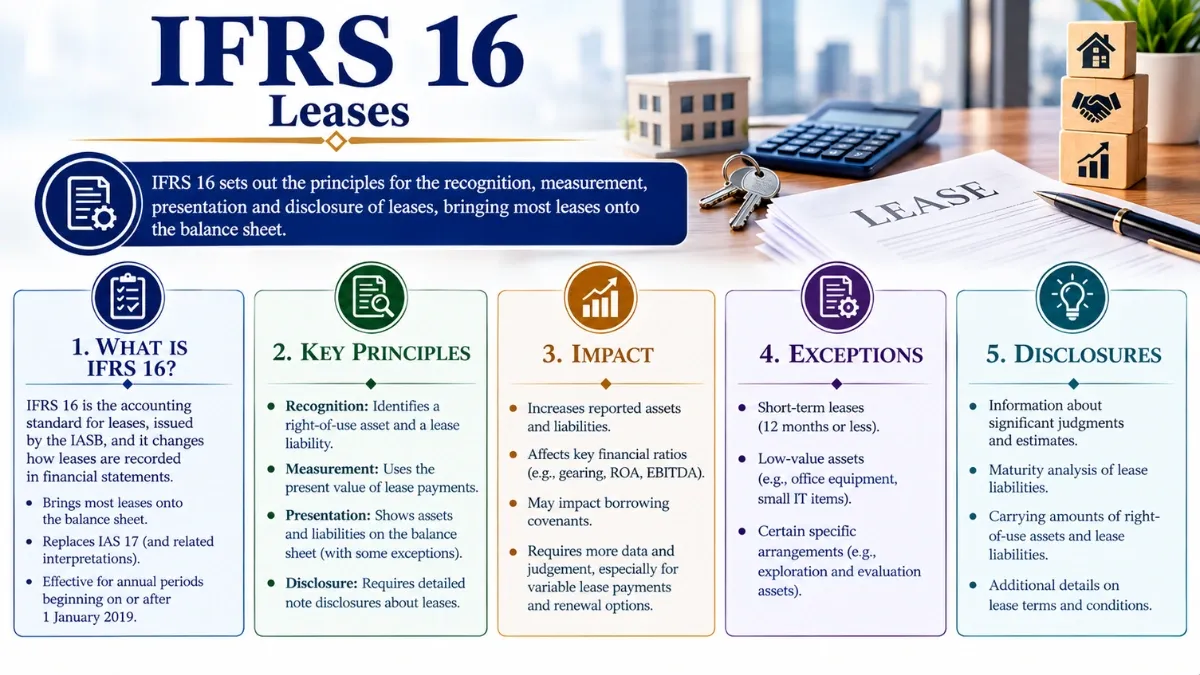
Lessee accounting a concept that explains the way by which a lessee records the financial impacts of its leasing activities. As per IFRS 16, lessees recognize ‘right of use’ asset (RoU) and ‘lease liability’, reflecting the present value (PV) of future lease payments. IFRS 16  ·  ASC 842  ·  Lease … Read More

ISA 720 (Revised) – The Auditor’s Responsibilities Relating to Other Information

ISA 720

ISA 720 (Revised) deals with the auditor’s responsibilities relating to other information, whether financial or non-financial information (other than ‘financial statements‘ and the ‘auditor’s report‘ thereon) included in an entity’s annual report. International Standards on Auditing  ·  IAASB  ·  Audit & Assurance International Standard on Auditing ISA 720 – The … Read More

ISA 580 – Written Representations

ISA 580

ISA 580 deals with the auditor’s responsibility to obtain written representations from management and where appropriate, those charged with governance in an ‘audit‘ of financial statements. Home› Audit› ISA 580 Written Representations International Standard on Auditing ISA 580 – Written Representations A comprehensive guide to the auditor’s obligations and management’s … Read More

Provision vs Contingent Liability (IAS 37): Key Differences

Provision vs Contingent Liability

The concept provision vs contingent liability explains that ‘Provision‘ is a liability that is recognized in the financial statements when a company has a probable obligation or a present obligation and ‘Contingent Liability‘ is a potential liability that may arise from past events but is uncertain in terms of its … Read More