IFRS 3 – Business Combinations

IFRS 3

The ‘OBJECTIVE’ of IFRS 3 is to Improve the relevance, reliability and comparability of the information that a reporting entity provides in its ‘Financial Statements’ about a Business Combination and its effects. IFRS 3 Business Combinations – Complete Guide 2024 | Accounting Standards International Financial Reporting Standard · IASB Standard … Read More

IFRS 2: Share-based Payment

IFRS 2

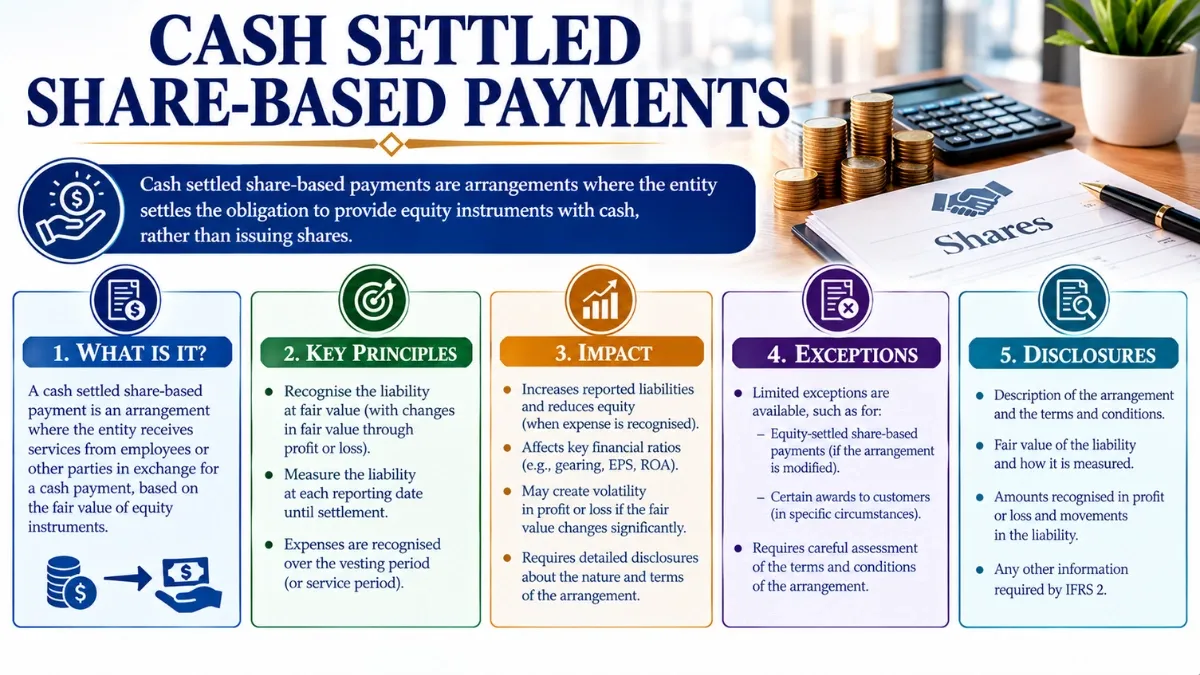
The ‘OBJECTIVE’ of IFRS 2 is to Specify the ‘financial reporting’ by an entity when it undertakes a share‑based payment transaction. In particular, it requires an entity to reflect in its profit or loss and financial position the effects of share‑based payment transactions, INCLUDING expenses associated with transactions in which … Read More

Strategy Implementation in Strategic Management

Strategy Implementation in Strategic Management

Strategy Implementation in Strategic Management MEANS Implementing the chosen strategies i.e the 3rd Element of ‘Strategic Management’ by Johnson, Scholes and Whittington. Elements of Strategic Management Johnson, Scholes and Whittington STATE that Strategic Management consists of three Elements: Strategy Implementation in Strategic Management – Three Aspects It MEANS Implementing the … Read More

What is Corporate Level Strategy and Why It is Important?

What is Corporate Level Strategy

What is Corporate Level Strategy i.e. the Strategy which CLARIFIES what businesses should we (an Entity) be in? What is Corporate Level Strategy? It is Concerned with DECIDING which business or businesses an entity should be in and setting targets for the achievement of the entity’s overall objectives. 1. Elements … Read More

What is the Difference between Assets and Liabilities?

What Is the difference between Assets and Liabilities?

What is the Difference between Assets and Liabilities? a Concept that STATES ‘Assets’ as Economic Resources owned or controlled by an entity to provide future benefits, AND ‘Liabilities’ represent the Obligations or Debts owed by an entity to external parties. Assets (As Per IAS 1) ‘Assets’ are Economic Resources owned … Read More