IFRS 2 Cash Settled Share-based Payments with Example

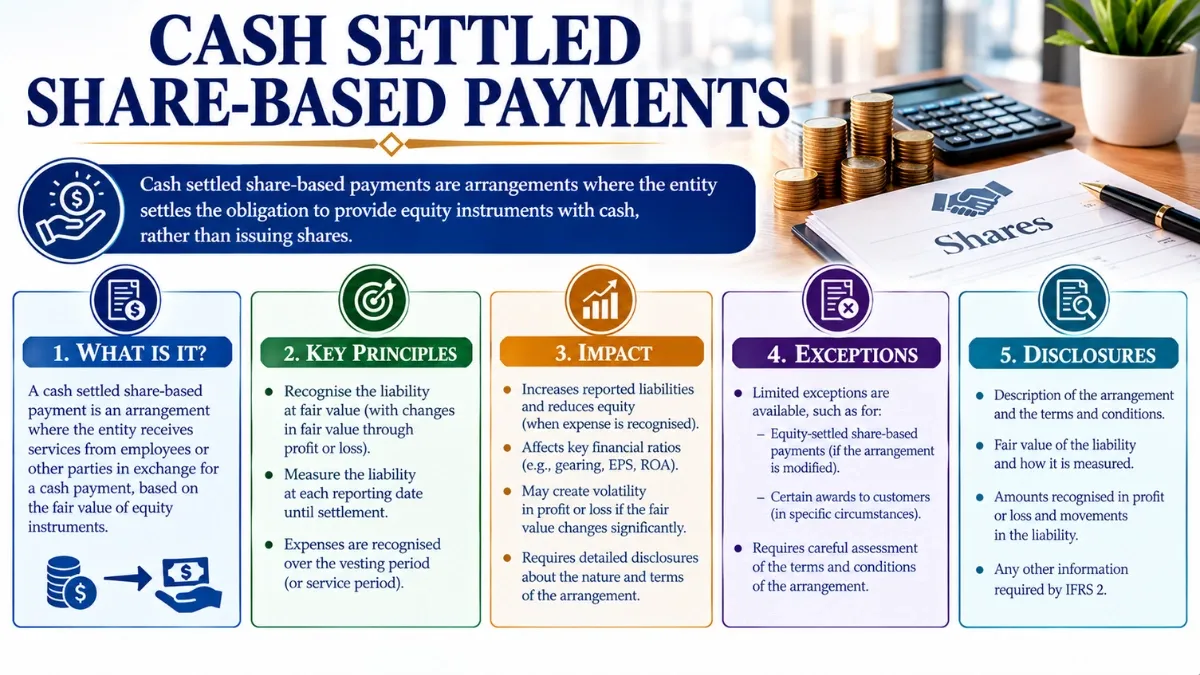
Cash Settled Share-based Payments

Cash settled share-based payments include the transactions in which the entity acquires goods or services by incurring liability to transfer cash or other assets to the supplier of those goods or services for amounts that are based on the price (or value) of ‘equity instruments’ (including shares or share options) … Read More

IFRS 9 Vs IAS 39 (Financial Instruments) – Key Differences

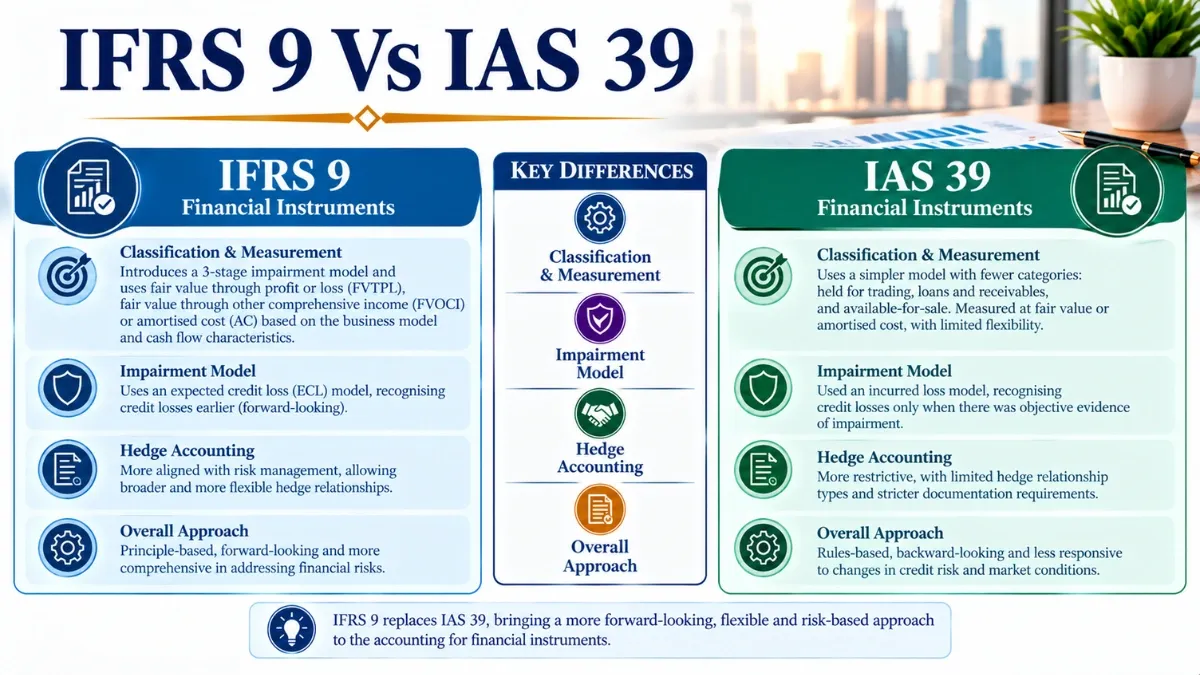
IFRS 9 Vs IAS 39

The one difference amongst many of IFRS 9 vs IAS 39 concept is the key difference in relation to the approach of impairment. IFRS 9 uses ‘Expected Credit Losses‘ (ECLs) to recognize impairment losses on financial assets, as compared to IAS 39 ‘Incurred Losses’. Last Updated – March, 2026 Financial … Read More

IFRS 14 – Regulatory Deferral Accounts

IFRS 14

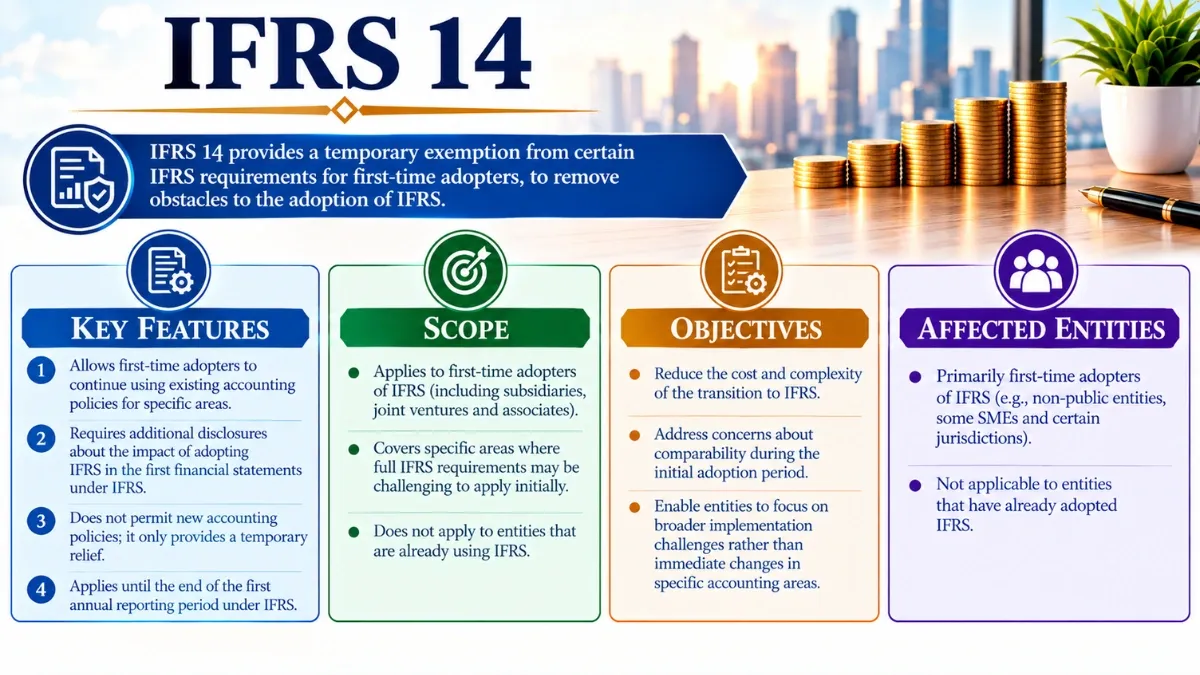
The objective of IFRS 14 – Regulatory Deferral Accounts is to specify the financial reporting requirements for ‘regulatory deferral account balances’ that arise when an entity provides goods or services to customers at a price or rate that is subject to rate regulation. Last Updated – March, 2026 IASB International … Read More

IFRS 13 – Fair Value Measurement

IFRS 13

IFRS 13 – Fair Value Measurement: Last Updated – March, 2026 IFRS Standard · IASB IFRS 13 – Fair Value Measurement The definitive guide to understanding fair value measurement under International Financial Reporting Standards, from the three-level hierarchy to disclosure obligations. Effective Since 1 Jan 2013 Issued By IASB Reading … Read More

IFRS 12 – Disclosure of Interests in Other Entities

IFRS 12

The objective of IFRS 12 – Disclosure of Interests in Other Entities is to require an entity to ‘disclose‘ information that enables users of its financial statements to evaluate: Last Updated – March, 2026 IASB International Financial Reporting Standard IFRS 12 – Disclosure of Interestsin Other Entities A comprehensive reference … Read More

IFRS 11 – Joint Arrangements

IFRS 11

The objective of IFRS 11 – Joint Arrangements is to establish principles for ‘financial reporting’ by entities that have an interest in arrangements that are controlled jointly (i.e. joint arrangements). Last Updated – March, 2026 International Financial Reporting Standards IFRS 11 – Joint Arrangements CA Written by Jhanzayb ACA Qualified … Read More

IFRS 10 – Consolidated Financial Statements

IFRS 10

The objective of IFRS 10 is to establish principles for the Presentation andPreparation of Consolidated Financial Statements when an entity ‘controls’ oneor more other entities. IFRS Standards · Financial Reporting Issued: May 2011 Effective: 1 Jan 2013 Standard Body: IASB Supersedes: IAS 27 (2008) Contents 01 Overview & Objective 02 … Read More

IFRS 8 – Operating Segments

IFRS 8

The ‘CORE PRINCIPLE’ of IFRS 8 is that an entity shall Disclose information to enable users of its financial statements to evaluate the nature and financial effects of the business activities in which it engages and the economic environment(s) in which it operates. ↑ International Financial Reporting Standards IASB Standard … Read More

IFRS 7 – Financial Instruments: Disclosures

IFRS 7

The ‘OBJECTIVE’ of IFRS 7 is to Require entities to provide disclosures in their Financial Statements that enable users to evaluate:  📋 IFRS Standard IFRS 7 Financial Instruments:Disclosures Issued By IASB Effective Date 1 Jan 2007 Last Major Amendment 2023 Replaces IAS 30 & IAS 32 (part) In This Guide … Read More

IFRS 6 – Exploration for and Evaluation of Mineral Resources

IFRS 6

The ‘OBJECTIVE’ of IFRS 6 is to Specify the financial reporting for the Exploration for and Evaluation of Mineral Resources. International Financial Reporting Standard 6 Overview Scope Recognition Measurement Impairment Disclosure FAQ § 01 — Introduction What Is IFRS 6? IFRS 6, Exploration for and Evaluation of Mineral Resources, is … Read More