Cash Settled Share-based Payments | IFRS 2

Cash Settled Share-based Payments

Cash Settled Share-based Payments as per IFRS 2 INCLUDE the transactions in which the entity acquires goods or services by incurring liability to transfer cash or other assets to the supplier of those goods or services for amounts that are based on the price (or value) of ‘Equity Instruments’ (including … Read More

Equity Settled Share-based Payments | IFRS 2

Equity Settled Share-based Payments

Equity Settled Share-based Payments as per IFRS 2 account for the payment for goods/services in the form of Equity Instruments (‘Shares’ or ‘Share Options’) of the Co./group company. 📘 IFRS 2 · Accounting Standard 📅 Standard: IFRS 2 🏛 Body: IASB 📂 Category: Financial Reporting Definition Scope Recognition Measurement Vesting … Read More

Derecognition of Financial Assets | IFRS 9

Derecognition of Financial Assets

Derecognition of Financial Assets as per IFRS 9 STATES that a ‘trade receivable should be de-recognized when an entity collects payment‘. The collection of payment signifies the end of any exposure to risks or any continuing involvement. ● IFRS 9 · IAS 39 · Financial Instruments 3 Core derecognition criteria … Read More

Hedge Accounting – Managing Financial Risk | IFRS 9

Hedge Accounting

Hedge Accounting APPLIES to all hedge relationships, with the EXCEPTION of fair value hedges of the interest rate exposure of a portfolio of financial assets or financial liabilities. Financial Accounting · Risk Management What Is It? Hedge Types Criteria Standards Process Journal Entries Effectiveness Benefits & Risks Glossary FAQ Hedge accounting … Read More

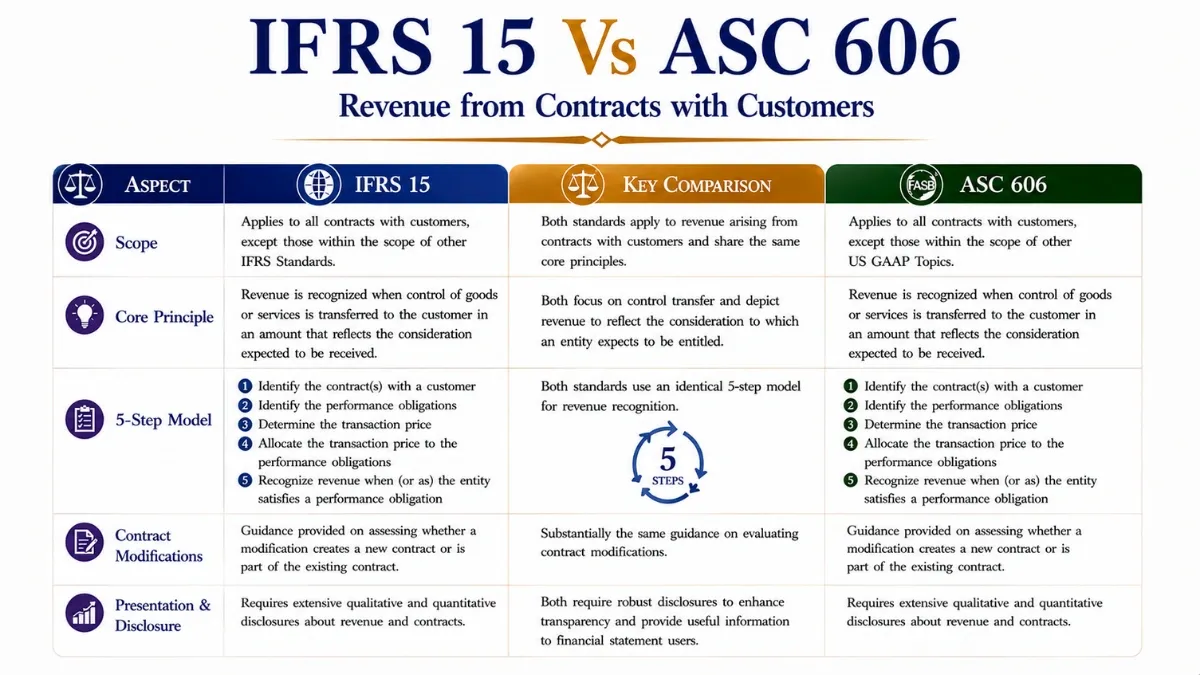
IFRS 15 – Revenue from Contracts With Customers

IFRS 15

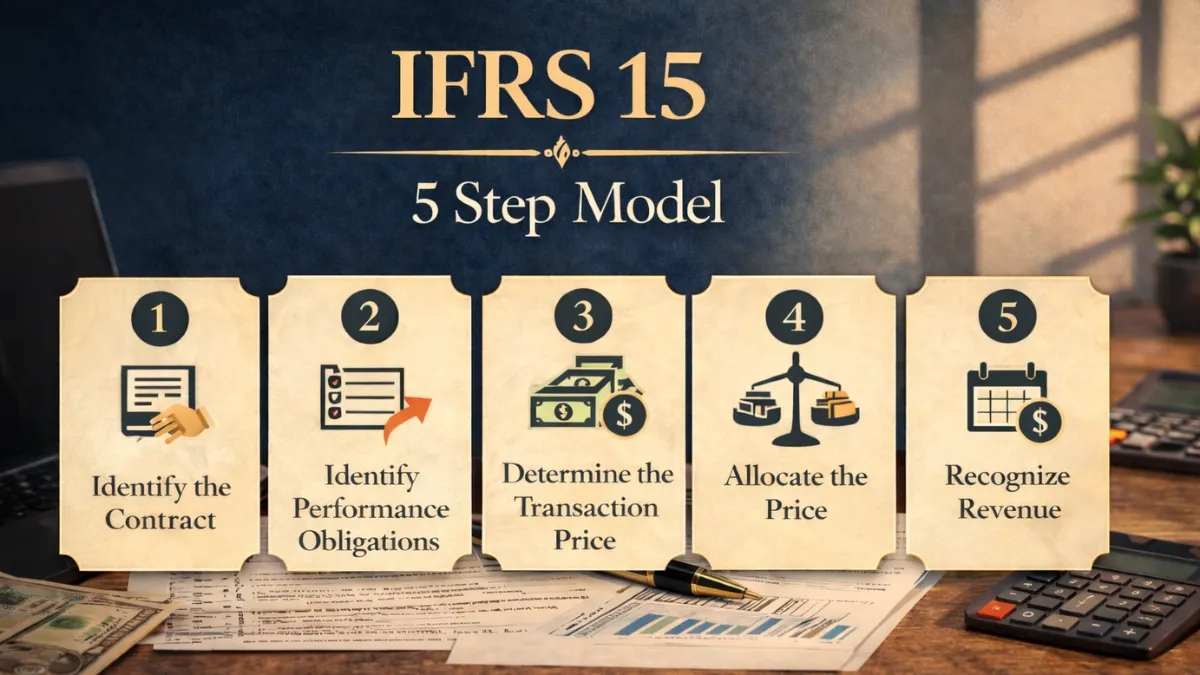
IFRS 15 promulgated by the International Accounting Standards Board (IASB) PROVIDES guidance on accounting for ‘Revenue from Contracts with Customers’. It was adopted in 2014 and became EFFECTIVE in January 2018. IFRS Standard · Revenue Recognition 📅 Effective: 1 January 2018 📋 Replaces: IAS 18 & IAS 11 🌍 Adopted … Read More

IFRS 14 – Regulatory Deferral Accounts

IFRS 14

The Objective of IFRS 14 is to specify the financial reporting requirements for ‘Regulatory Deferral Account Balances‘ that arise when an entity provides goods or services to customers at a price or rate that is subject to rate regulation. IASB International Financial Reporting Standard IFRS Standard 14 Contents Overview Scope … Read More

IFRS 13 – Fair Value Measurement

IFRS 13

IFRS 13: IFRS Standard · IASB Effective Since 1 Jan 2013 Issued By IASB Updated March 2025 Overview Objective Fair Value Hierarchy Key Principles Measurement Process Disclosures Scope FAQ What is IFRS 13? IFRS 13 Fair Value Measurement is an International Financial Reporting Standard issued by the International Accounting Standards … Read More

IFRS 12 – Disclosure of Interests In Other Entities

IFRS 12

The Objective of IFRS 12 is to require an entity to ‘Disclose‘ information thatenables users of its financial statements to evaluate: IASB International Financial Reporting Standard Effective: Jan 2013 Issued by IASB Contents 01Overview & Background 02Objective of IFRS 12 03Scope & Exclusions 04Key Definitions 05Disclosures – Subsidiaries 06Joint Arrangements … Read More

IFRS 11 – Joint Arrangements

IFRS 11

The objective of IFRS 11 is to establish principles for ‘Financial Reporting’ byentities that have an interest in arrangements that are controlled jointly(i.e. Joint Arrangements). International Financial Reporting Standards Effective from 1 January 2013 Replaces IAS 31 Last Updated Feb 2025 Overview Scope Types Classification Accounting Disclosures vs IAS 31 … Read More