IFRS 8 – Operating Segments
IFRS 8

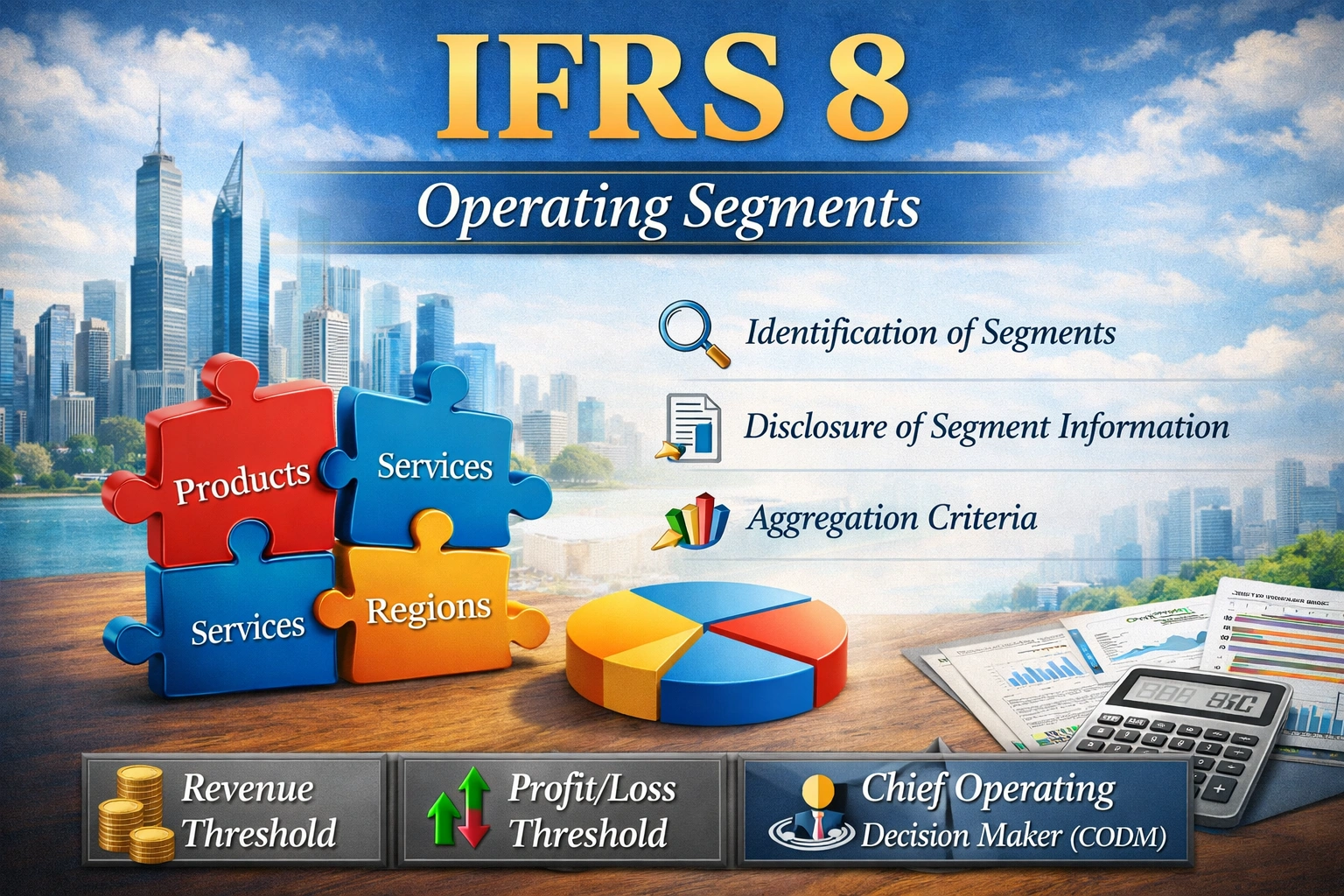
The ‘CORE PRINCIPLE’ of IFRS 8 is that an entity shall Disclose information to enable users of its financial statements to evaluate the nature and financial effects of the business activities in which it engages and the economic environment(s) in which it operates. ↑ International Financial Reporting Standards IASB Standard … Read More
IFRS 7 – Financial Instruments: Disclosures

IFRS 7

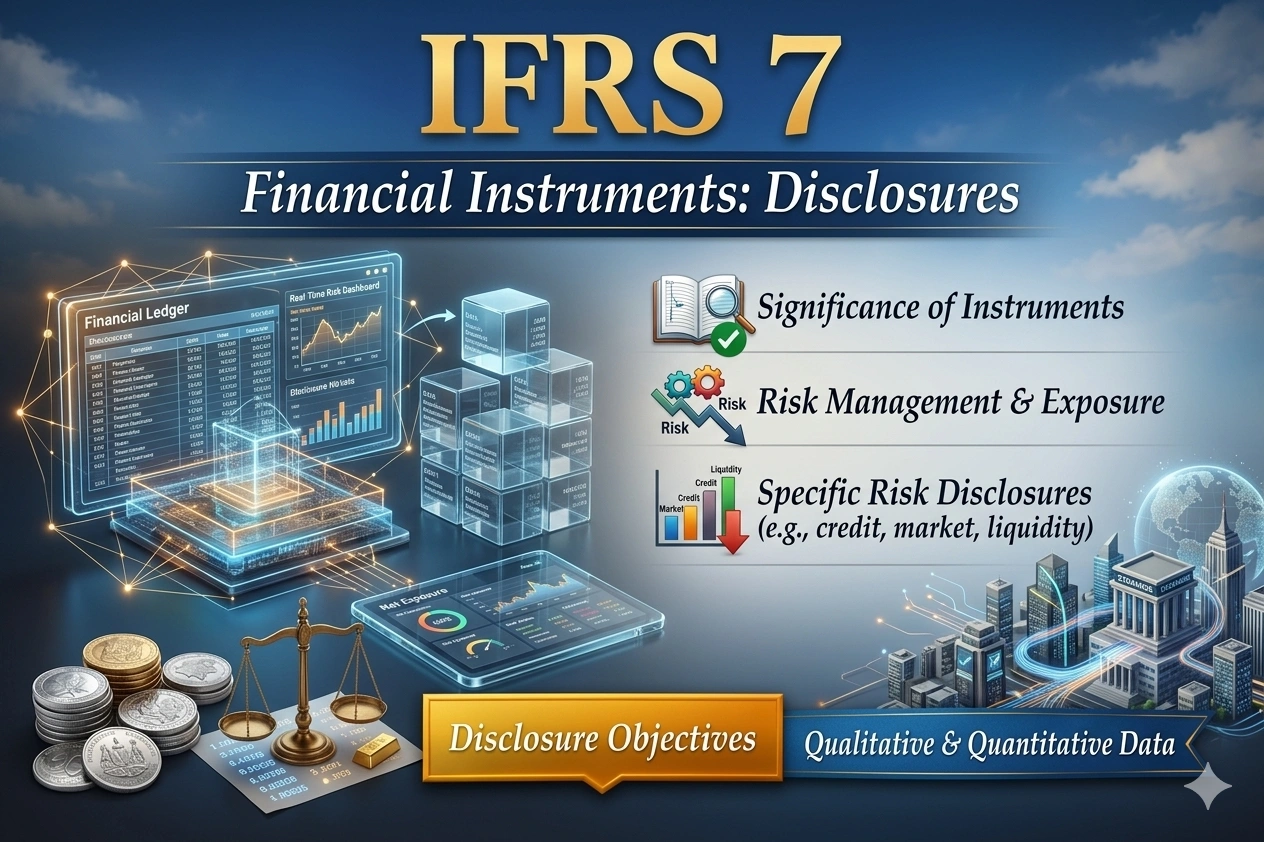
The ‘OBJECTIVE’ of IFRS 7 is to Require entities to provide disclosures in their Financial Statements that enable users to evaluate:  📋 IFRS Standard IFRS 7 Financial Instruments:Disclosures Issued By IASB Effective Date 1 Jan 2007 Last Major Amendment 2023 Replaces IAS 30 & IAS 32 (part) In This Guide … Read More

IFRS 6 – Exploration for and Evaluation of Mineral Resources

IFRS 6

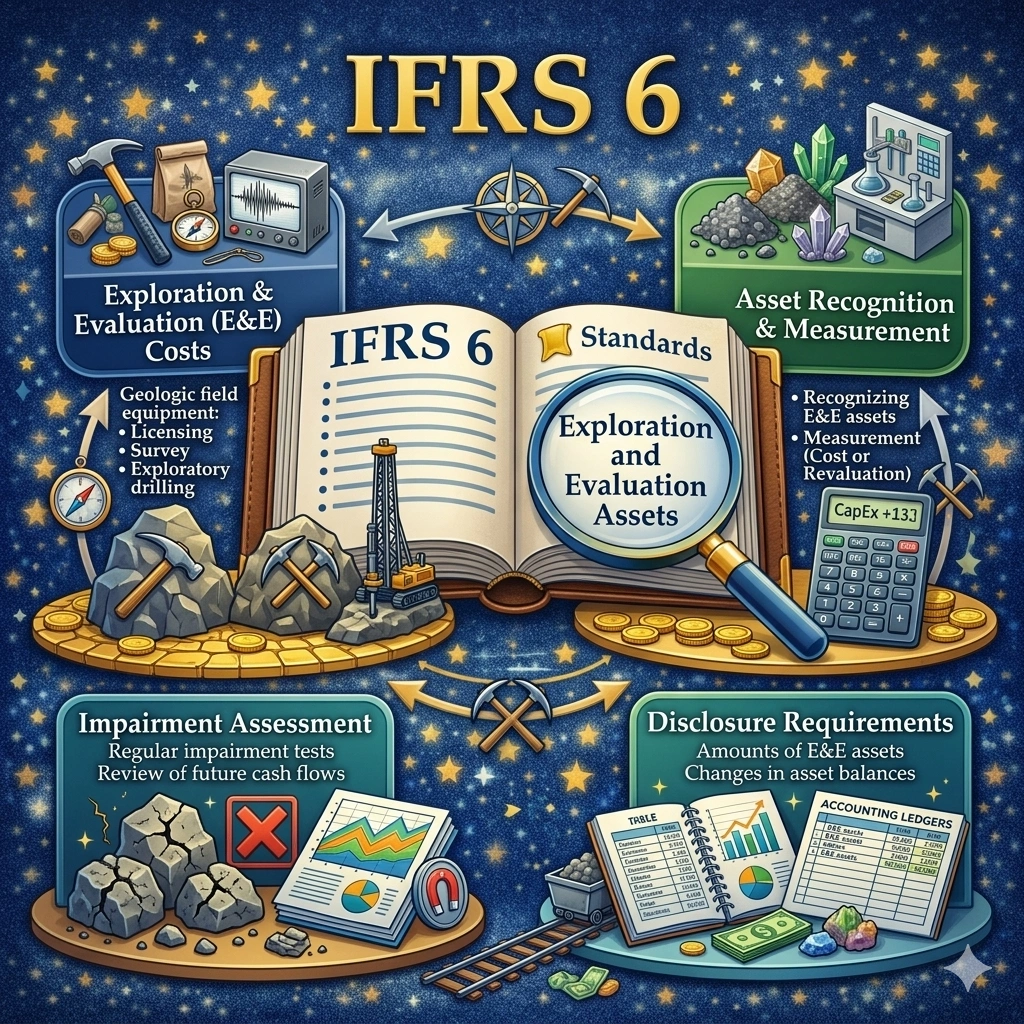
The ‘OBJECTIVE’ of IFRS 6 is to Specify the financial reporting for the Exploration for and Evaluation of Mineral Resources. International Financial Reporting Standard 6 Overview Scope Recognition Measurement Impairment Disclosure FAQ § 01 — Introduction What Is IFRS 6? IFRS 6, Exploration for and Evaluation of Mineral Resources, is … Read More

IFRS 5: Non-Current Assets Held for Sale and Discontinued Operations

IFRS 5

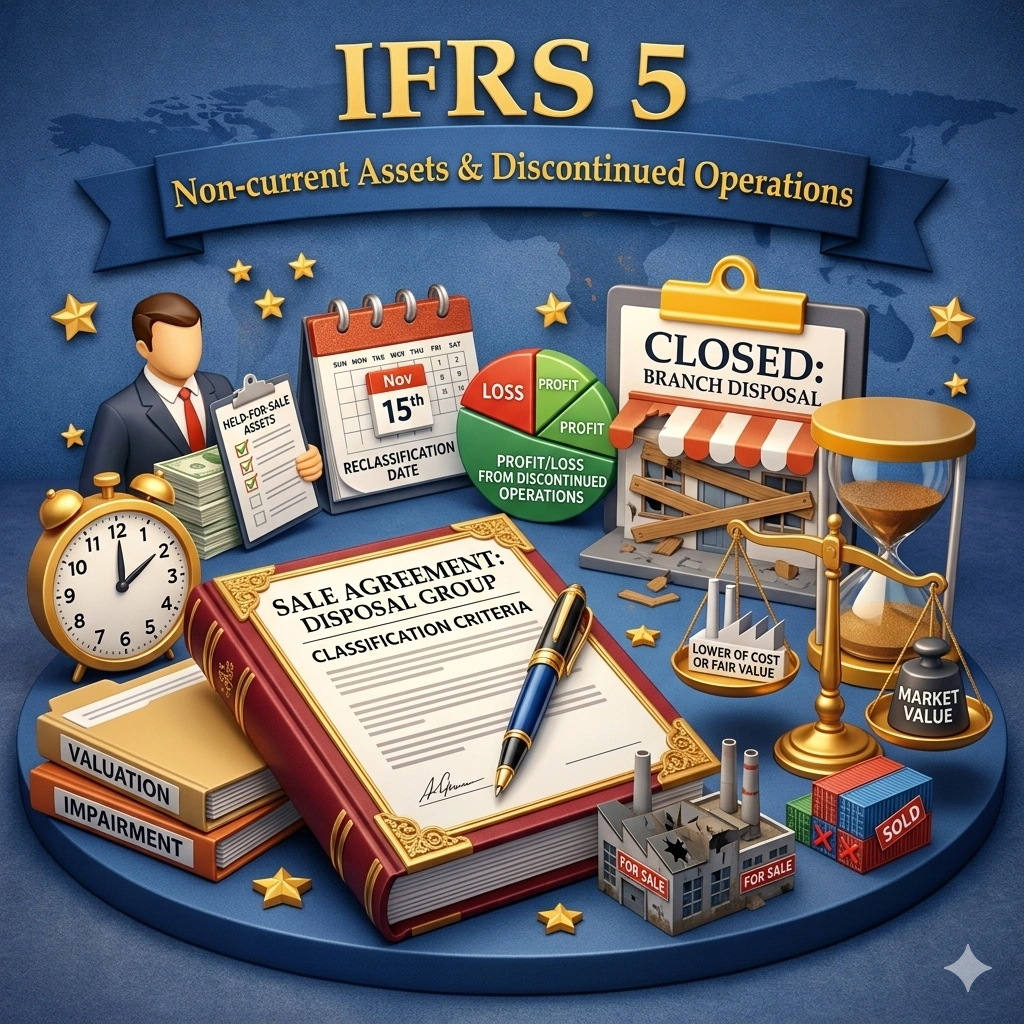
The ‘OBJECTIVE’ of IFRS 5 is to specify the ‘Accounting’ for Assets Held for Sale and the ‘Presentation and Disclosure’ of Discontinued Operations. IASB Standard · Financial Reporting Issued byIASB Effective Date1 January 2005 ReplacesIAS 35 CategoryNon-current Assets Table of Contents 01Overview of IFRS 5 02Scope & Applicability 03Classification as … Read More

IFRS 3 – Business Combinations

IFRS 3

The ‘OBJECTIVE’ of IFRS 3 is to Improve the relevance, reliability and comparability of the information that a reporting entity provides in its ‘Financial Statements’ about a Business Combination and its effects. IFRS 3 Business Combinations – Complete Guide 2024 | Accounting Standards International Financial Reporting Standard · IASB Standard … Read More

IFRS 2: Share-based Payment

IFRS 2

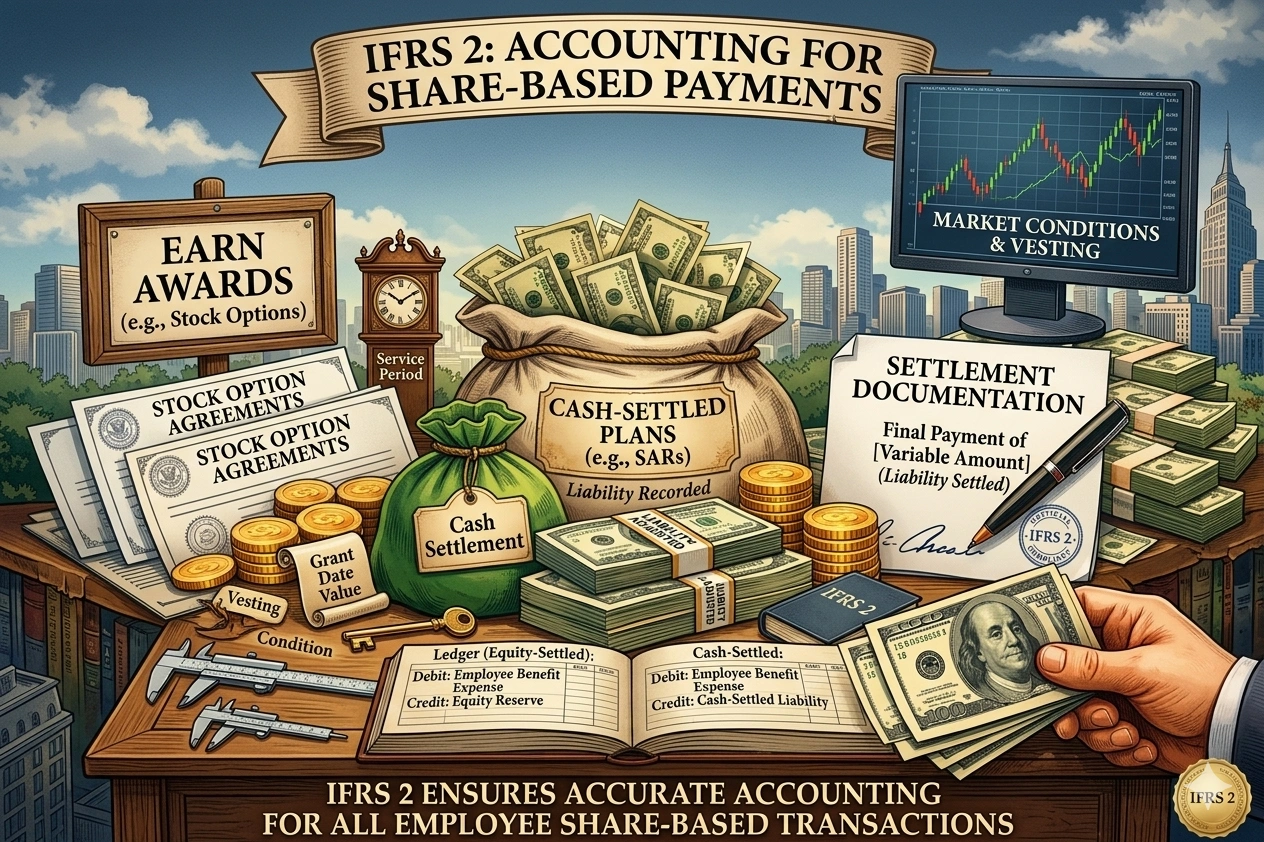
The ‘OBJECTIVE’ of IFRS 2 is to Specify the ‘financial reporting’ by an entity when it undertakes a share‑based payment transaction. In particular, it requires an entity to reflect in its profit or loss and financial position the effects of share‑based payment transactions, INCLUDING expenses associated with transactions in which … Read More

Strategy Implementation in Strategic Management

Strategy Implementation in Strategic Management

Strategy Implementation in Strategic Management MEANS Implementing the chosen strategies i.e the 3rd Element of ‘Strategic Management’ by Johnson, Scholes and Whittington. Elements of Strategic Management Johnson, Scholes and Whittington STATE that Strategic Management consists of three Elements: Strategy Implementation in Strategic Management – Three Aspects It MEANS Implementing the … Read More