IAS 40 – Investment Property

IAS 40

The ‘OBJECTIVE’ of IAS 40 is to prescribe the accounting treatment for Investment Property and related disclosure requirements. IFRS Standard Issued by: IASB Effective: 1 January 2005 Last Revised: 2016 Supersedes: IAS 25 📋 Table of Contents What is IAS 40? Objective & Core Principle Scope & Definitions Recognition Criteria Measurement: Fair … Read More
Reversal of Impairment Loss | IAS 36

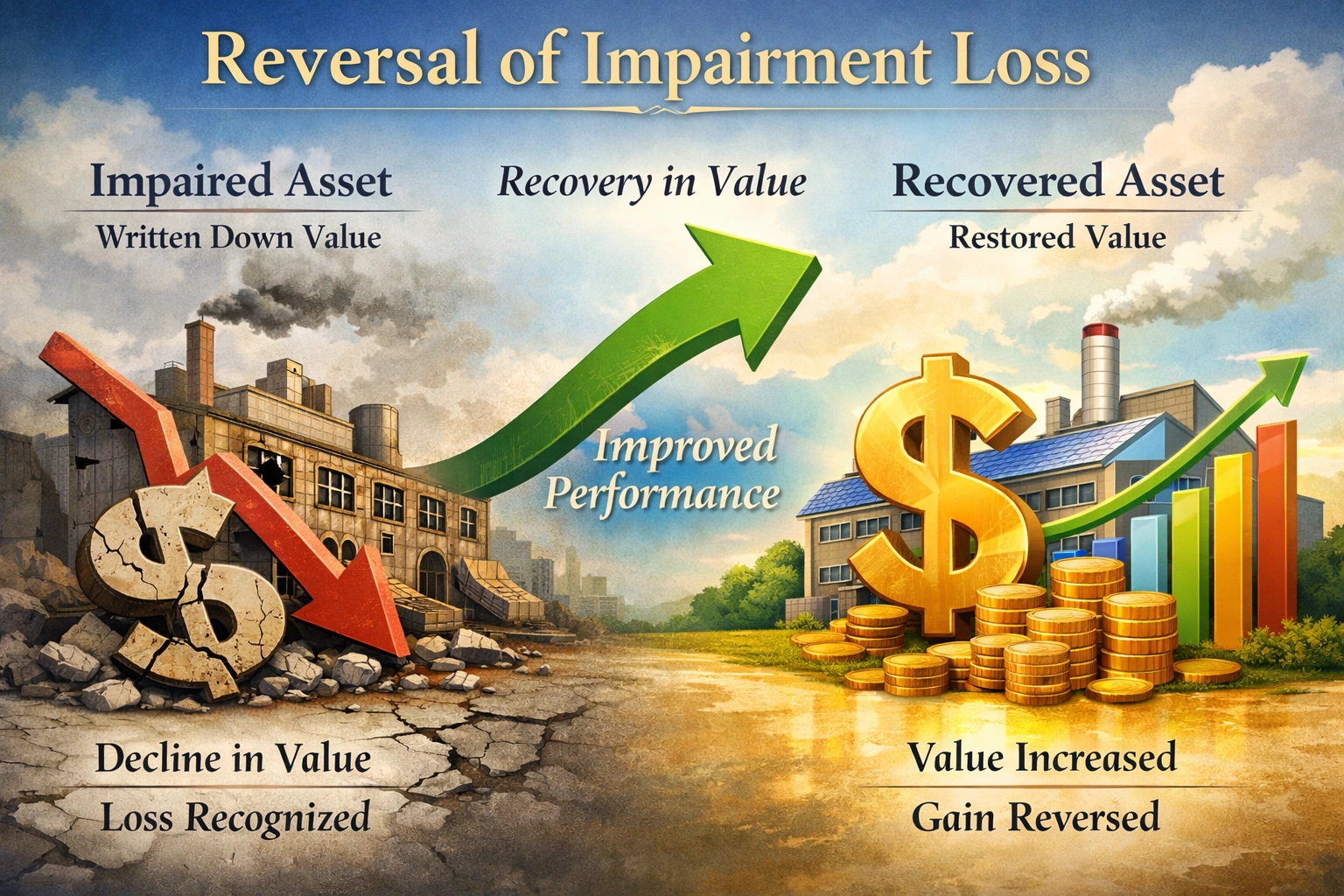
Reversal of Impairment Loss

Reversal of Impairment Loss is INCREASING the value of a previously Impaired asset when there is a change in circumstances indicating that the ‘Impairment Loss’ is NO longer necessary. IAS 36 · IFRS · Financial Reporting Table of Contents What Is Reversal of Impairment Loss? Conditions for Reversal The Reversal … Read More

Lessor Accounting – Finance Vs Operating | IFRS 16

Lessor Accounting

Lessor Accounting focuses on how asset owners recognize lease income, classify leases, and report financial performance under modern standards like IFRS 16. It involves distinguishing between Finance and Operating leases, each with different recognition and measurement approaches. Understanding lessor accounting is essential for accurate financial reporting and compliance. Learn how … Read More

Statement of Cash Flows Indirect Method | IAS 7

Statement of Cash Flows Indirect Method

The Statement of Cash Flows Indirect Method PRESENTS the SOCF beginning with Net income or loss, with subsequent ADDITIONS to or DEDUCTIONS from that amount for Non-cash revenue and expense items, Resulting in cash flow from operating activities. International Accounting Standard (IAS 7) STATES that SOCF is a vital ‘Financial Statement‘ … Read More

IAS 10 – Events After the Reporting Period

IAS 10

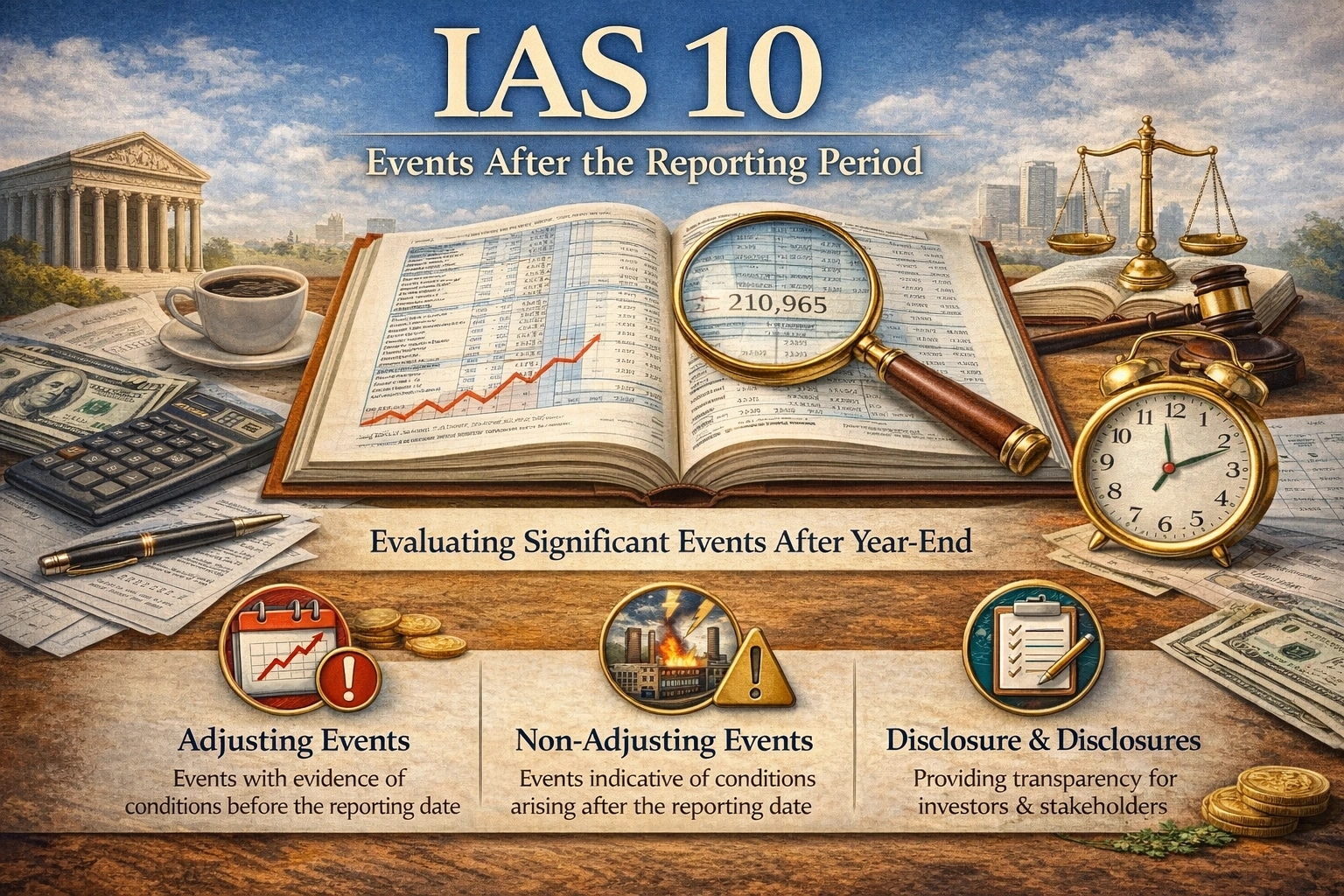
IAS 10 ‘Events After The Reporting Period” STATES when events after the end of the reporting period should be adjusted in the financial statements. ‘Adjusting Events‘ are those providing evidence of conditions existing at the end of the reporting period, WHEREAS ‘Non-Adjusting Events‘ are indicative of conditions arising after the reporting period. … Read More

ISA 520 – Analytical Procedures

ISA 520

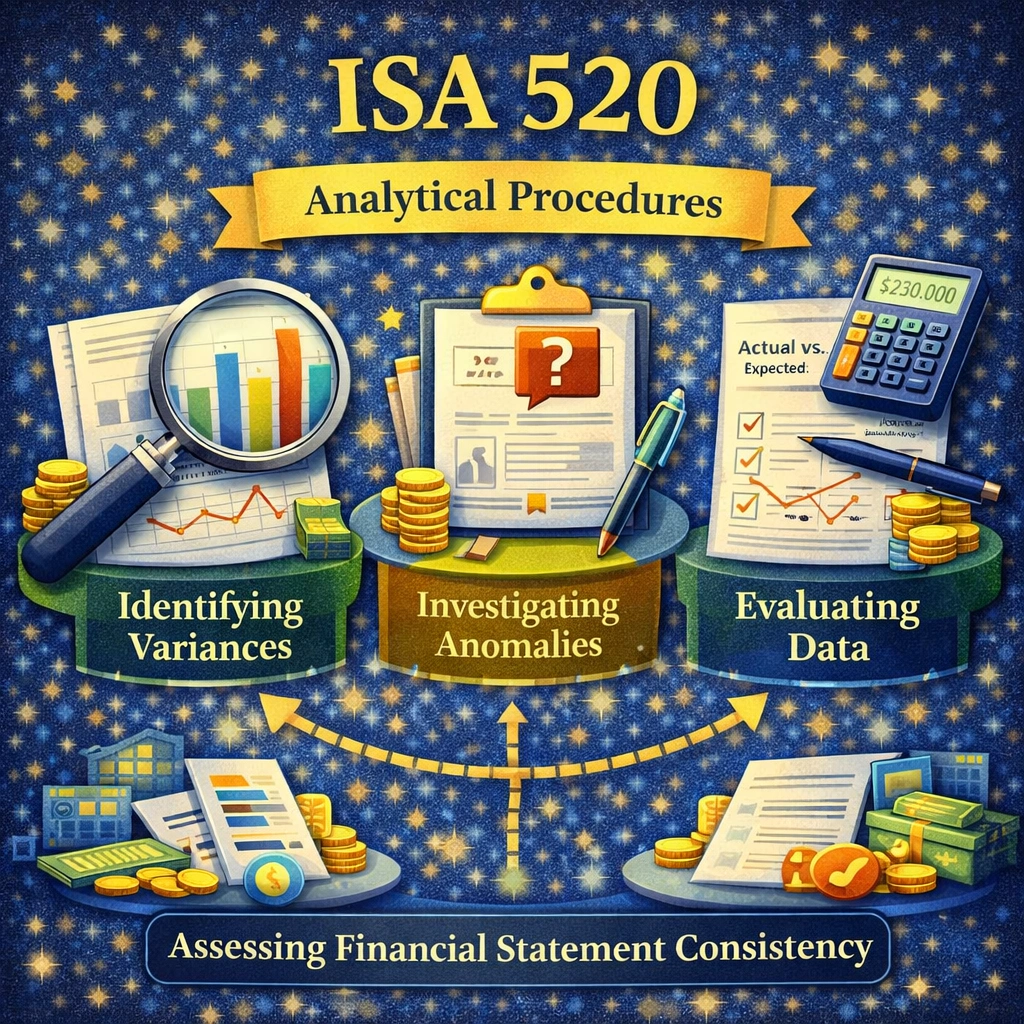
ISA 520 DEALS with the auditor’s USE of analytical procedures as substantive procedures (‘Substantive Analytical Procedures’). IAASB · International Standard on Auditing Effective: 15 December 2009 Issued by: IAASB / IFAC Category: Audit Evidence Home› Auditing Standards› ISA 520 In This Article Scope & Purpose Definition Objectives Substantive Procedures Reliability … Read More

Intended Strategy Examples That Shaped Industries

Intended Strategy Examples

Intended Strategy refers to a company’s planned course of action designed to achieve long-term goals and Competitive Advantage. Exploring Intended Strategy Examples helps businesses understand how clear objectives, structured planning, and resource allocation drive ‘Success‘. From (Market expansion plans to Product innovation strategies), these examples highlight the Importance of proactive … Read More

Consolidated Vs Unconsolidated Financials: Key Differences | IFRS 10 and IAS 27 Insights

Consolidated Vs Unconsolidated Financials

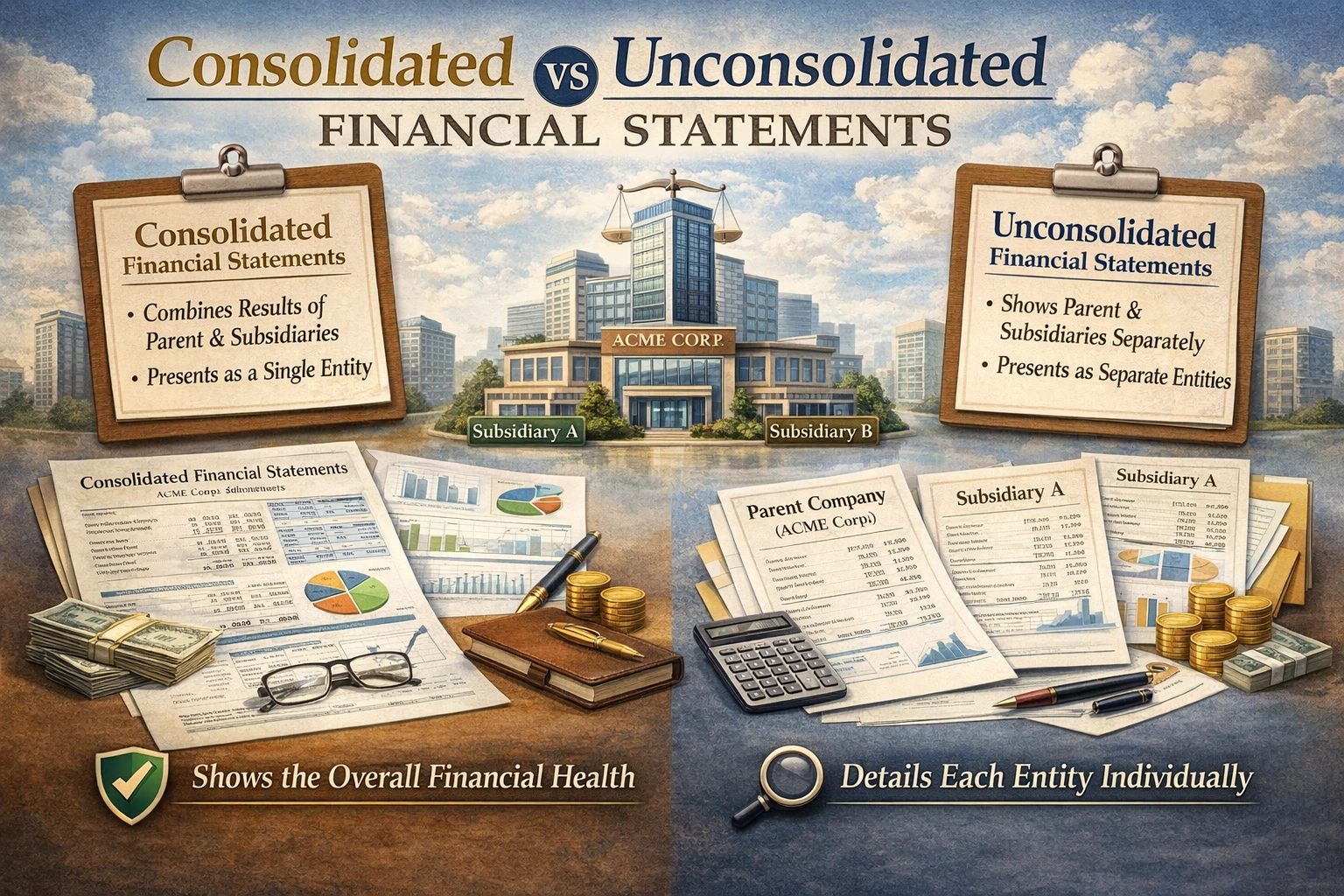
The concept Consolidated Vs Unconsolidated Financials DEPICTS that Consolidated FS reflect the Financial Statements of ‘Parent Company’ and its ‘Subsidiary/(ies)’ as a SINGLE Economic Entity and Unconsolidated FS reflect the Financial Statements of a ‘SINGLE Entity’. Financial Reporting Accounting Standards Corporate Finance Standards IFRS · US GAAP Contents Overview Consolidated … Read More